
Intellectual property strategy
We will introduce intellectual property strategies that build the foundation for global competition and support technological superiority.
- Intellectual property strategy
- Intellectual Property in Numbers
- Intellectual property development
- Multifaceted intellectual property activities
- Interview
Regarding intellectual property strategy
Intellectual property is the foundation for continuing to use technology in business. It involves determining the order in which to patent inventions born from research and development, how much to disclose, what information to keep confidential, and how to connect these to overseas expansion, countermeasures against counterfeit products, and trademark protection.
TBM's intellectual property is built by formalizing on-site decisions closely related to technology development, and by working backward from future business needs to create a state where it can be both "protected" and "expanded."
Eliminate defensive intellectual property risks and protect the value of technology.
- Strategically utilize patents and know-how to prevent the leakage of technological value.
- By acquiring rights both domestically and internationally, we are building barriers to counterfeit products and late entrants into the market.
- By continuously researching and analyzing other companies' patents, we proactively avoid the risks of business disruption and development delays.
- To grasp changes and risks in the competitive environment early on, we use intellectual property antennas to monitor the filing trends and strategies of other companies.
- Appropriate contracts for joint development and external collaborations
- Ensuring flexibility in business development through patenting tailored to the business phase.
Proactive Intellectual Property: Making intellectual property a driving force for growth
- Through regular sessions with developers, we uncover inventions that can lead to future business value from the early stages of research.
- A forward-thinking patent application that considers not only the current product and core technology, but also anticipated future applications and customer challenges.
- Building an intellectual property portfolio that aligns with the R&D roadmap and looks ahead to business strategies several years into the future.
- Acquiring global trademark rights enables smooth global expansion of developed products.
- We position intellectual property as a strategic investment that will support future business growth, and make intellectual property decisions from a medium- to long-term perspective.
Intellectual Property in Numbers
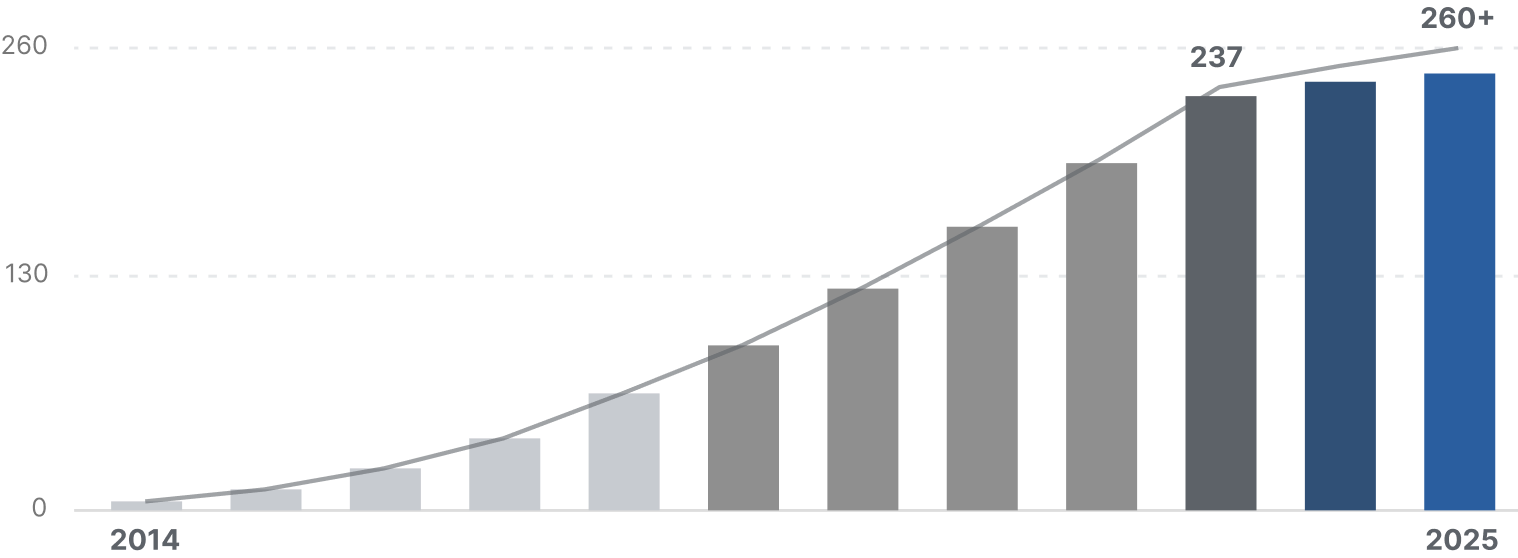
Cumulative number of registered patents (as of May 2026)
More than 260 items
Cumulative number of registered countries
Over 50 countries
External evaluation
Reiwa 4th Year Intellectual Property Achievement Award
We build up a multi-layered portfolio of patents, covering not only material composition but also formulation, manufacturing processes, and applications, creating a robust bundle of rights to firmly protect our technological assets. This accumulated patent portfolio elevates technology into a bargaining chip, serving as compelling evidence in all business situations, including partnerships, contracts, adoption, and fundraising. Our intellectual property strategy comprehensively supports business growth.
Intellectual property development tailored to business expansion
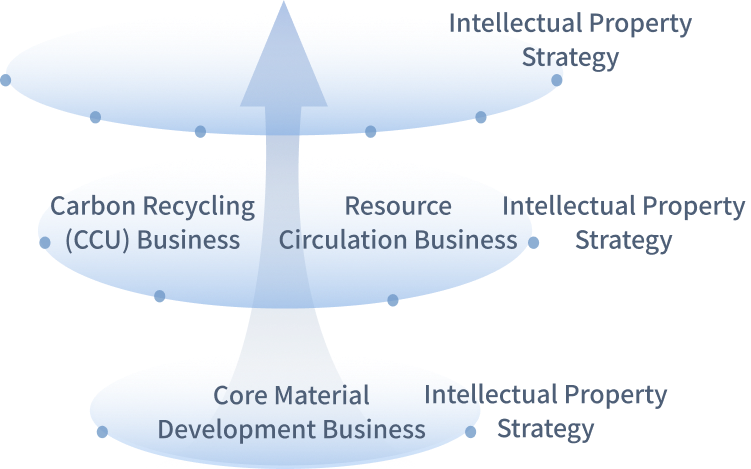
TBM's intellectual property strategy has expanded alongside its core materials development business. Currently, as its business domain expands to include material circulation business and CCU, its scope and depth are being continuously increased. By proactively designing patents, trademarks, and know-how, TBM creates a structure where intellectual property drives business growth.
Multifaceted intellectual property activities
We take the tacit knowledge accumulated in the field of technology development, verbalize it, and systematically connect it to patent applications, contracts, confidential information management, and rule-making. Beyond simply securing rights on a one-off basis, we consistently promote the necessary intellectual property activities from design to implementation for each business phase, creating a situation where intellectual property functions as a driving force for the business.
Basic policy
01
design
By using backcasting, we anticipate the next business area and design the necessary rights, information, and rules in advance.
02
Market research
We track changes in domestic and international regulations, competition, and applications to determine the priority of patent applications and searches.
03
Risk assessment
We need to identify the rights of other companies, contract terms, and the risk of counterfeit products from overseas as early as possible, and then design our approach accordingly.
04
Information organization
This involves articulating on-site know-how and decision-making criteria, and organizing the key technical points and information that must be protected.
05
Rights utilization
We uncover the hidden value within technologies and businesses, and transform it into a form that can be protected by intellectual property rights and utilized.
Other activities
Formalizing tacit knowledge
This involves translating the know-how, judgment criteria, and intuitive insights of engineers and those working in the field into intellectual property and technical documentation rules.
Confidential information management
Personal knowledge and technical information are managed in conjunction with decisions regarding applications, contracts, and disclosures.
Rulemaking
With a view to the movement towards standards and specifications, we are involved in creating the prerequisites for technology to be used in the market.
About JSA standardsRead the detailed article on intellectual property strategy.
For information on our patent strategy and the organizational structure of our intellectual property department, please see Times Bridge Media.