Press release
TBM、独自の配合・混練技術により使用済み
プラスチック由来の高機能再生材「CirculeX」を開発
Overcomes Material Degradation and Odor Challenges, Achieving Strength That Surpasses Virgin Plastics
株式会社TBM(本社:東京都千代田区、代表取締役CEO:山﨑敦義、以下TBM)は、家庭から排出される容器包装プラスチックを原料にTBMが素材開発で培った独自の配合・混練技術を活用することで、使用済みプラスチック由来の再生材であるPCR材(ポストコンシューマーリサイクル)の障壁となっていた物性低下や臭気の課題を解決し、曲げ強度・耐衝撃度については従来のPCR材、さらにバージンプラスチックを上回る強度を実現した高機能再生材「CirculeX(サーキュレックス)」を開発したことをお知らせします。
現在、海洋ゴミ問題やCO₂排出削減の観点から、世界的にプラスチックの資源循環が求められています。各種法制度や業界指針等により高い顧客ニーズが存在し、2025年に欧州では新たなELV規則案が公表され、PPWR(包装・包装廃棄物規則)が発効されるなど、世界的にサーキュラーエコノミー実現に向けた取り組みが進められています。国内でもグローバルの潮流に対応して、再生プラスチックへの関心が高まり、再生プラスチック市場は国内外で強い成長トレンドにあります。TBMは年内に横須賀サーキュラー工場での「CirculeX」の量産体制を構築し、従来のPCR材や生産・流通工程などで発生する産業廃棄物由来の再生材(以下、PIR材)の製品用途だけでなく、価格競争力を有するバージンプラスチックが使用されている製品用途含めて「CirculeX」を展開していきます。
■ Development Overview
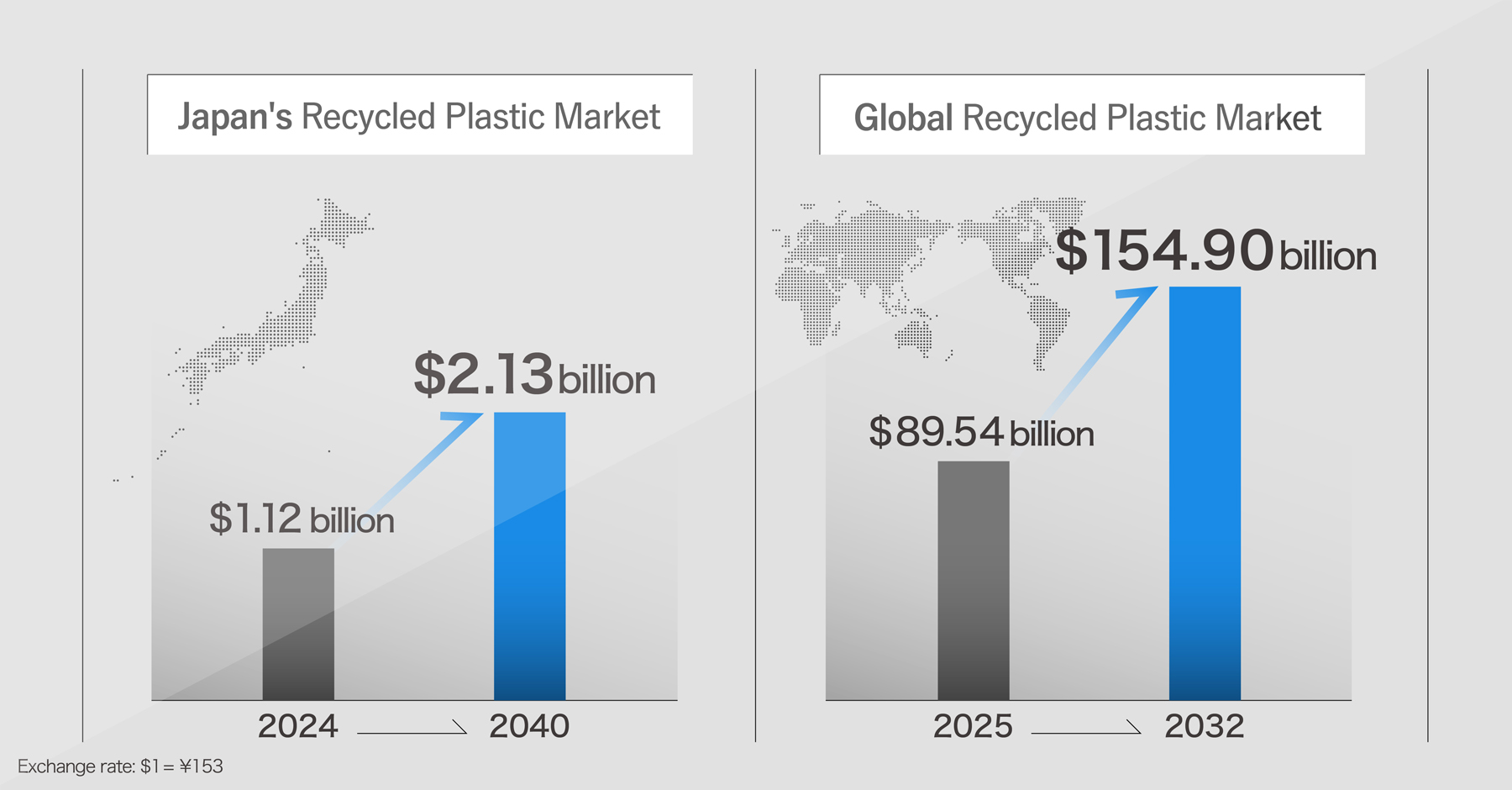
Regulations to promote plastic circularity are tightening worldwide. In the EU, the Packaging and Packaging Waste Regulation (PPWR) sets a target to recycle 55% of packaging waste by 2030.*1 In the UK, the Plastic Packaging Tax applies to plastic packaging containing less than 30% recycled plastic.*2 In Japan, waste plastics are still heavily reliant on incineration and the material recycling rate remains around 20%.*3 Under the Act on Promotion of Resource Circulation for Plastics (the Plastic Resource Circulation Act), Japan has set a goal of doubling the use of recycled plastics by 2030.*4 Against this backdrop, Japan’s recycled plastics market is expected to grow from around $1.12 billion in 2024 to around $2.13 billion in 2040,*5 while the global market is projected to expand from around $89.54 billion in 2025 to around $154.90 billion in 2032.*6 As demand surges, high-quality recycled materials derived from industrial waste (PIR) face tightening supply, rising procurement difficulty, and price increases. Meanwhile, PCR materials made from post-consumer plastics still suffer from issues such as odor from food residues and insufficient strength, limiting domestic applications mainly to one-way pallets and fillers for civil engineering and construction materials; although collection volumes are expected to rise to 1.7 million tons by 2030 due to expanded collection items,*7 the market remains supply-constrained.
*1 Oshurengo Nihon Seifu Daihyobu: EU no PPWR (Hoso Hoso Haiki Butsu Kisoku) no Gaiyo
*2 JETRO (Nihon Boeki Shinko Kiko): Susumu Plastic Hoso Taisaku, Seifu mo 2022-nen 4-gatsu kara Hosozei Donyu e (Eikoku)
*3 Ippan Shadan Ho jin Plastic Junkan Riyo Kyokai: 2024-nen Plastic Seihin no Seisan Haiki Saishigenka Shorishobun no Jokyo
*4 Kankyosho: Plastic Shigen Junkan Senryaku
*5 Kabushikigaisha Fuji Keizai: Saisei Plastic ya Biomass Plastic no Shijo o Chosa
*6 MarketsandMarkets:Recycled Plastics Market
*7 Pla-Journal PJ: [Column] Yori-ho to Pla-shinho, Ittaiteki Unyo e muketa Kadai to Tenbo
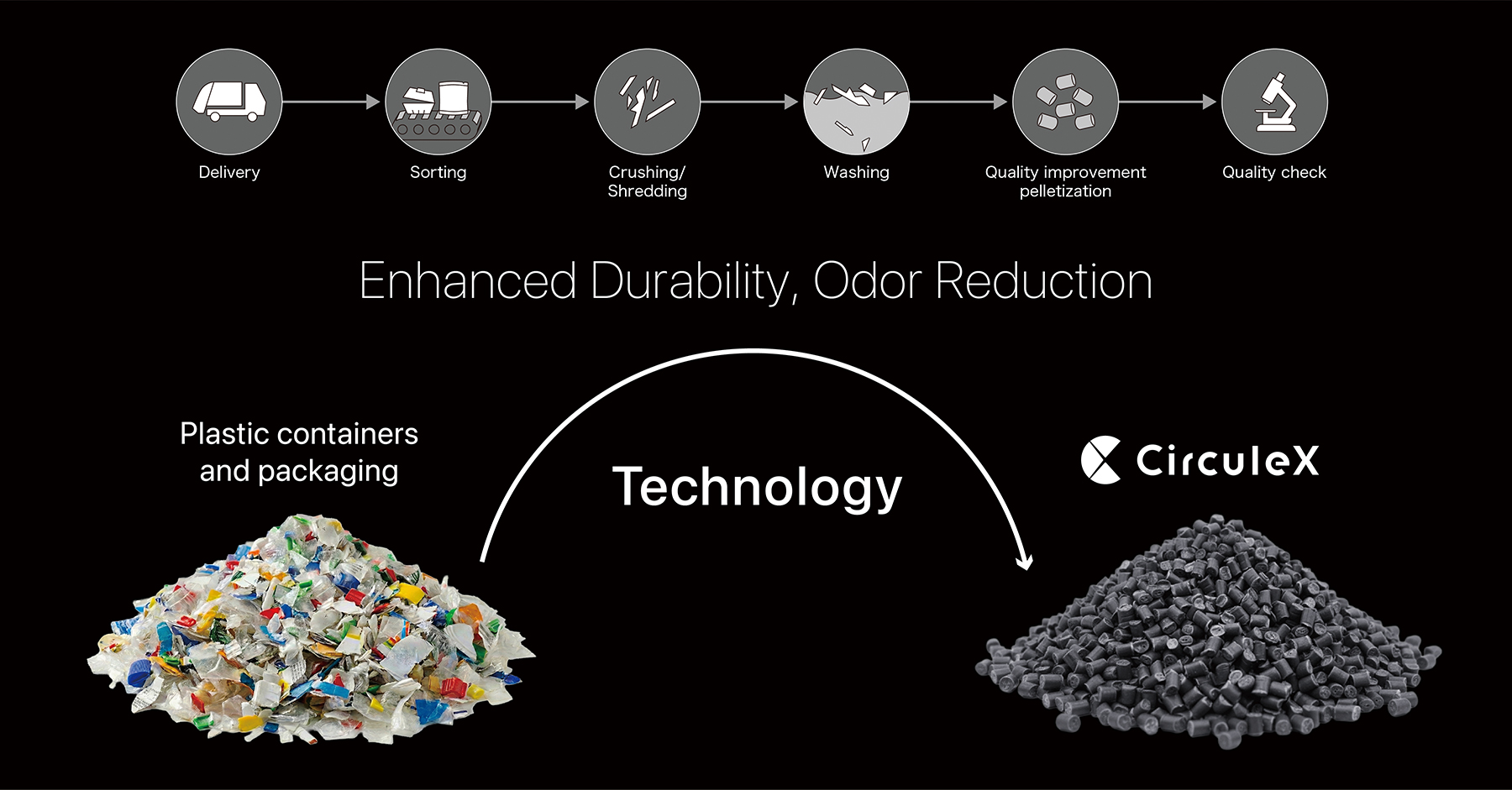
こうした中、TBMは、LIMEX事業で培った素材開発の独自の配合・混練技術や横須賀サーキュラー工場のプロセス改善を通じて、PCR材の強度不足や臭気改善といった品質課題を抜本的に解決し、供給逼迫と価格高騰が続くPIR材やバージンプラスチックの製品用途に活用可能な高機能再生材「CirculeX」の開発に成功しました。
■ Features of "CirculeX"
Delivers strength exceeding conventional PCR made from plastic containers and packaging and virgin plastics
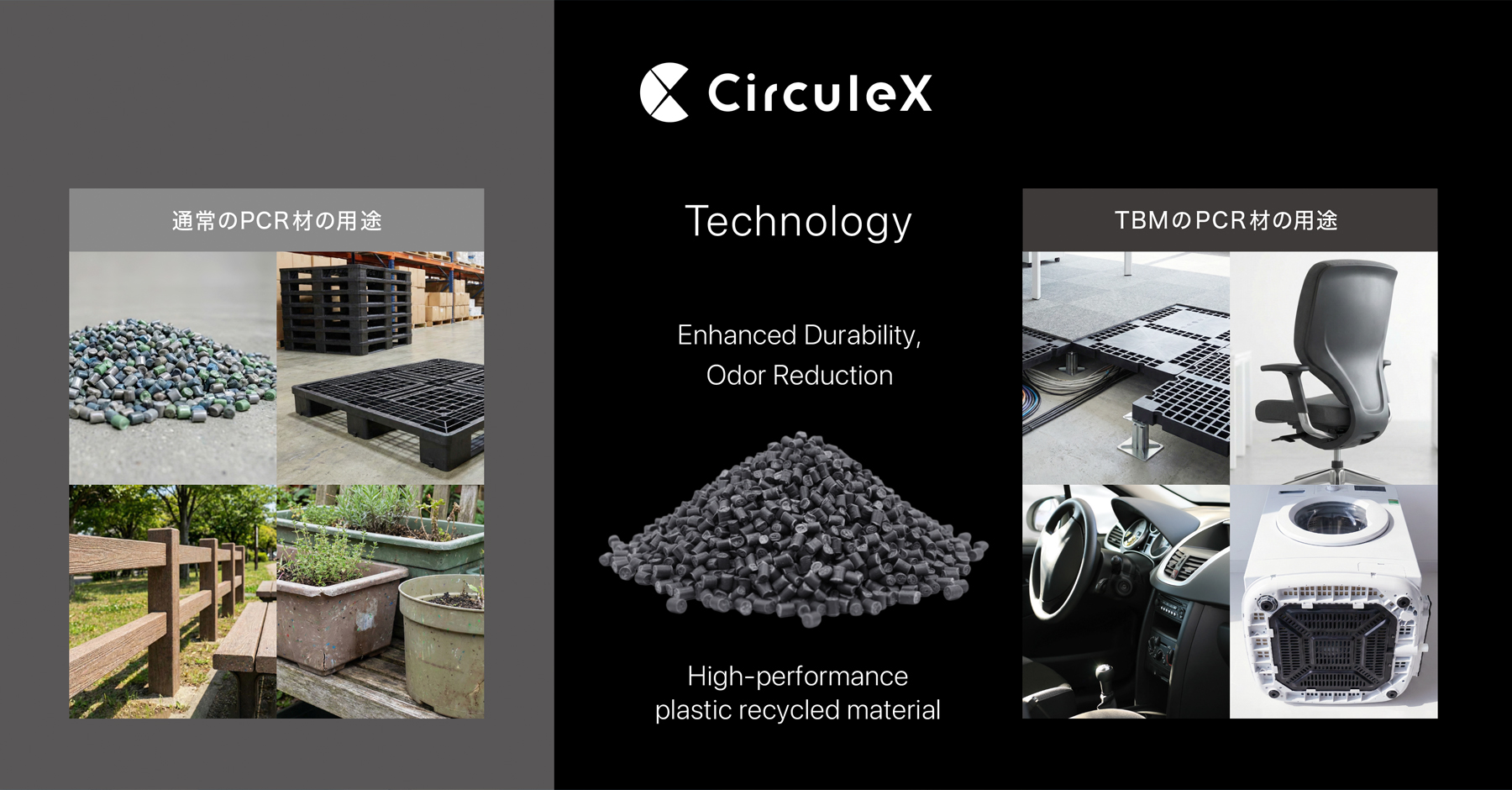
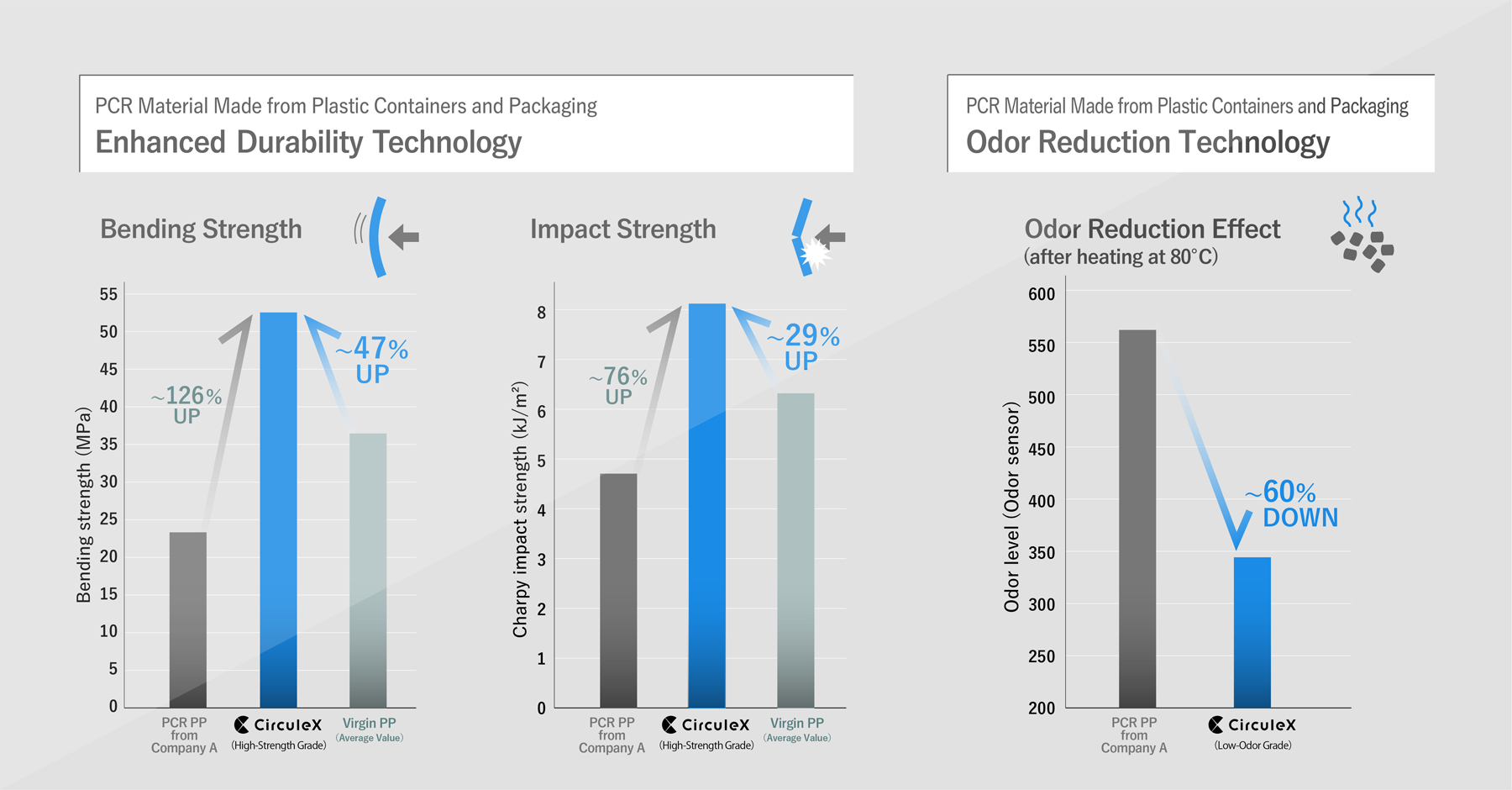
独自の配合・混練技術で改質を図り、「CirculeX」は使用済みの容器包装プラスチック由来のPCR材でありながら、曲げ強度は、従来のPCR材と比較して約126%、バージンプラスチックと比較して約47%、耐衝撃強度は、従来のPCR材と比較して約76%、バージンプラスチックと比較して約29%、従来のPCR材やバージンプラスチックを上回る強度を実現しました*。建築資材、物流資材、自動車部品など、耐久性が求められる様々な分野での利用が可能です。
*Calculation method: Evaluation results from tests conforming to JIS K 7171 (bending strength) and JIS K 7111 (Charpy impact strength) (in-house research). Physical properties are representative values and not guaranteed values.
Reduces odor by approximately 60% versus conventional PCR made from plastic containers and packaging
Through improvements to the washing process, TBM reduced odor by approximately 60% compared with conventional PCR made from plastic containers and packaging. This expands potential applications to a wide range of indoor and outdoor products, including furniture, home appliance components, and automotive interior materials.
*Test method: Odor level of molded samples was measured after heating at 80 degrees C for 1 hour using a hot-wire semiconductor sensor (in-house testing). Physical properties are representative values and not guaranteed values.
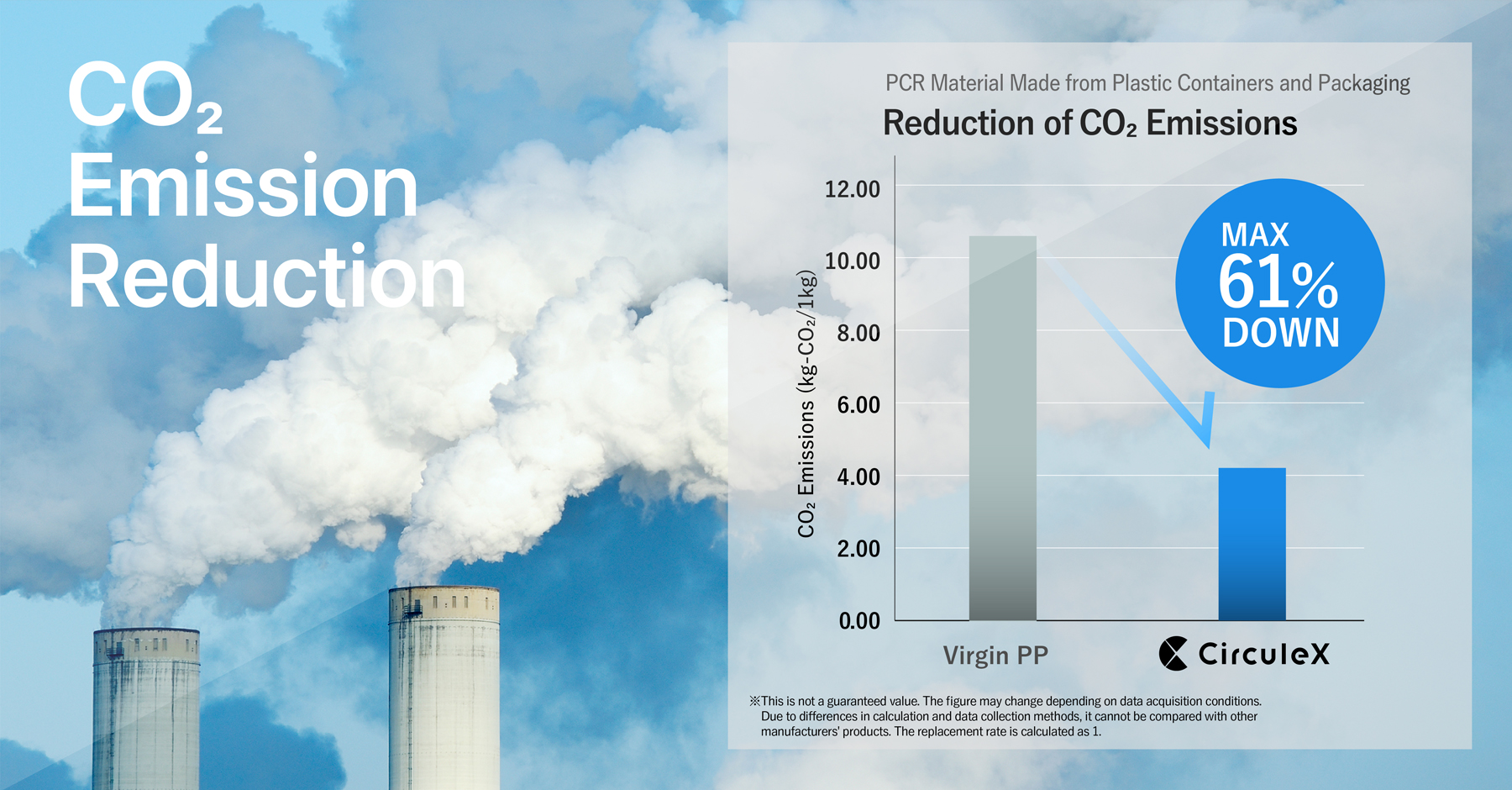
・Reduces greenhouse gas emissions by approximately 61% compared to virgin plastic
Used plastics that cannot be material-recycled have traditionally been incinerated through "thermal recovery," where they are burned mainly for use as fuel and the resulting heat is recovered. Compared with virgin plastics, CirculeX reduces CO2 emissions by up to 6.43 kg per 1 kg (up to 61%).
Calculation method: Calculated across the full lifecycle from raw material procurement through manufacturing and incineration for disposal. Compared against the use of 100% virgin plastics, assuming effectively 100% renewable electricity is used in the manufacturing process at the Yokosuka Circular Factory.
・CirculeX grade lineup
We offer flexible proposals tailored to customer challenges, including "High strength + Low odor," "High strength," and "Low odor" grades. Additionally, we can adjust the strength and flowability according to the product application.
| Item | High strength + Low odor grade | High strength grade | Low odor grade |
|---|---|---|---|
| Product Features | [Strength and low odor] This high-end grade material combines high strength with low odor. It is ideal as a replacement for virgin plastic or PIR materials where odor generation is a concern indoors and strength is also required. *Strength can be adjusted to suit the application. | [Strength exceeds virgin plastic] Our unique compounding technology overcomes the lack of strength that is an issue with regular recycled material (PCR materials). It has strength characteristics that exceed those of virgin plastic. *Strength can be adjusted according to the application. | [Reduces odors characteristic of plastic containers and packaging by approximately 60%] Advanced cleaning and treatment processes significantly reduce unpleasant odors caused by food residue, etc., making it possible to use PCR materials in indoor areas where they have previously been avoided due to their odor. |
| Applicati-on | ・Furniture and fixtures : chair core material, desk interior ・Home appliances : base plates, backs, internal parts - Automotive interiors : Internal structural materials covered with upholstery materials and carpets |
・Construction: Resin materials Logistics and industry : for heavy items and automated warehouses (returnable) ・Automobiles : suspension parts (mud and stone chip resistant) |
Logistics and industry : indoor containers |