Research and Development Policy and Strategy
This section introduces TBM's mission and philosophy regarding technology development, as well as its research and development policies and strategies for transforming environmental value into economic value.
- The ideal form of research and development
- Pillars of Strategy
- Progress toward global implementation and social implementation
The ideal form of research and development
Our R&D is not confined to a specific research organization; instead, we have established a system where R&D personnel from the Technology Development Division and each business promotion team are closely integrated. Unlike the typical matrix-type organizations of other companies, a key feature is that our researchers and developers are deeply committed to the front lines of business promotion. This system allows us to directly feed market needs and customer challenges back into technology development. This enables us to cycle through the process from basic research to applied development and then to social implementation in the shortest possible time. This unique "business-linked R&D system" is our strength in responding to global challenges.
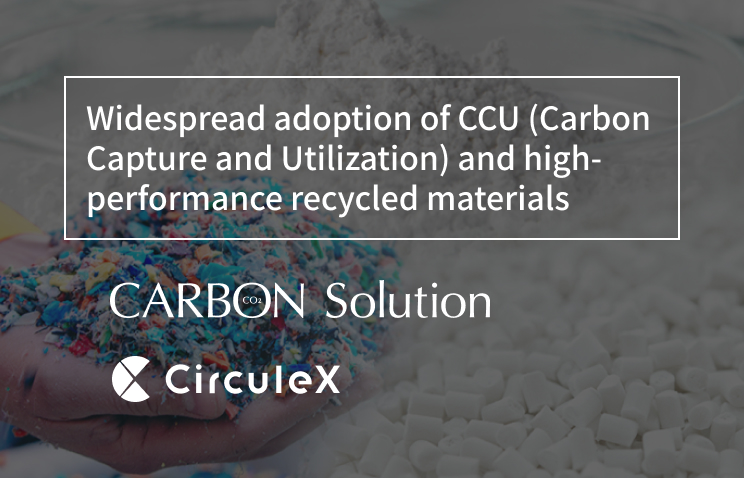
CCU technology (CO₂ capture and reuse)
We view CO₂ as a resource and are developing solutions from its capture and sequestration to its utilization in materials. We are striving to establish next-generation technologies toward the realization of a carbon-recycling society.
High-performance recycled material
We will promote the development and widespread adoption of high-value-added, high-performance recycled material by utilizing our unique blending and mixing technologies.
Environmentally friendly materials and products
We develop new materials and products that contribute to reducing greenhouse gas emissions throughout the entire supply chain. We strongly support the GX (greening) of our customers and society.
Pillars of Strategy
Talents
Our team includes researchers and engineers specializing in diverse fields such as resin development, molding, and inorganic materials research. Specialists with varied backgrounds come together to tackle groundbreaking challenges for the future of our planet.
organization
Manufacturing bases both domestically and internationally, along with each business development team, work closely together. The Intellectual Property Department collaborates from the research and development stage, establishing a system to elevate the patenting of inventions related to CCU and high-performance recycled material into a competitive intellectual property strategy.
Regarding organizational structuretechnology
The project will be driven by CO₂ capture and reuse using CCU (Carbon Capture and Recycling) technology, and the advanced technological development of high-performance recycled material.
We are working to create materials with high environmental value and accelerating co-creation through open innovation.
function
Under the four objectives of "profit generation," "function creation," "business opportunity creation," and "sustainability," the business promotion team and R&D personnel work closely together to transform technological results into business value.
Global achievements and progress toward social implementation
TBM has been promoting cutting-edge R&D in collaboration with organizations such as the WEF (World Economic Forum), the Ministry of Economy, Trade and Industry, and NEDO. Through joint research with universities and international awards, we are expanding GX Chemical, a product originating in Japan, globally.
TBM was selected for the Ministry of Economy, Trade and Industry's "Subsidy for the Development of Advanced Technology Demonstration and Evaluation Equipment" in 2013, and has been promoting research and development and practical application of materials, including CCU and high-performance recycled material.
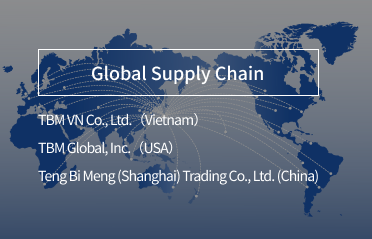
In 2021, with support from the Ministry of Economy, Trade and Industry’s “Subsidy for Corporate Relocation to Create Employment in Areas Affected by Tsunamis and Nuclear Disasters (Support Program for the Relocation of Manufacturing and Other Industries),” we completed a mass-production plant (Tagajo, Miyagi Prefecture) and have built a global supply chain by establishing material production systems both domestically and overseas, as well as by setting up overseas subsidiaries.
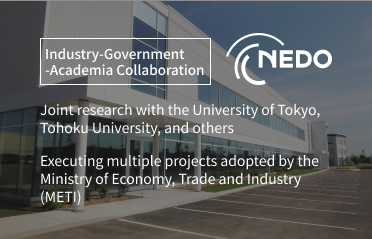
In research and development, we are strengthening industry-government-academia collaboration. We have received multiple NEDO (New Energy and Industrial material circulation models involving local communities and partners, and even developing cutting-edge technologies to convert emitted CO₂ into new materials. By building industry-academia co-creation frameworks with university institutions that are geared towards practical application, we are accelerating the social implementation of advanced technologies.
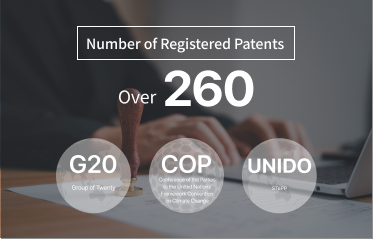
Holding over 260 patents in more than 50 countries worldwide, the company has received the "Intellectual Property Achievement Award (Minister of Economy, Trade and Industry Award)" from the Japan Patent Office. Furthermore, it has won international green chemical sustainability awards such as Plug and Play in the United States. It has established a high level of objective credibility both domestically and internationally through its participation in the WEF, SBT certification, presentations at COP and G20, and registration with UNIDO's "STePP."