
Material Development Business
- About the materials development business
- Surrounding the business
Environment and challenges - Number of hiring companies/local governments
- Global expansion
- Materials intellectual property strategy
- CCU materials
- low-carbon material LIMEX
- recycled material
(recycled containers and packaging materials) - Contact
Developing Materials that Address Environmental and Social Challenges
This business addresses the urgent market need for climate change mitigation and plastic waste reduction by solving two key challenges faced by companies handling materials: compliance with increasingly stringent environmental regulations and securing high-quality alternative materials with stable supply capabilities. As specific solutions, we develop, manufacture, and sell environmentally conscious materials, including: “Carbon Recycled Materials” made by capturing and reusing CO₂, “CCU Calcium Carbonate” as a high-value-added raw material, “CirculeX,” a high-performance recycled material with enhanced physical properties achieved through proprietary development, and “LIMEX,” a plastic alternative material primarily composed of limestone. Our carbon recycled materials, which enable long-term CO₂ sequestration, are being utilized in construction materials such as interior and exterior applications, while recycled materials and LIMEX are being expanded into industries such as automotive, home appliances, and packaging, where regulations related to decarbonization and resource circulation are rapidly advancing. These materials help reduce environmental impact across the entire supply chain, enabling companies to establish a strong competitive advantage in markets where sustainability considerations are increasingly essential. In addition, the low barrier to adoption—allowing products to be manufactured using existing molding equipment—combined with the use of limestone, an abundant natural resource with low depletion risk, ensures both supply stability and price stability, enabling continuous and sustainable utilization. Our proprietary technological development capabilities ensure the quality required by end users. Backed by extensive expertise and comprehensive technical support related to these materials, we support companies in achieving decarbonized management and sustainable manufacturing.
Business Environment and Challenges
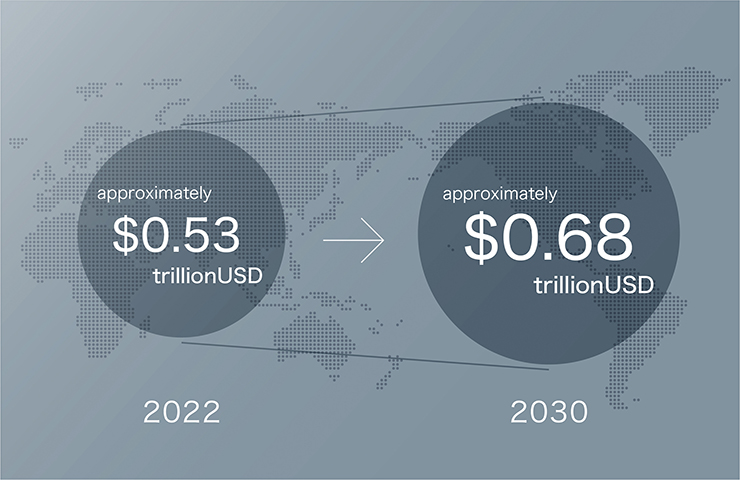
As climate change becomes more severe, regulations on the use of petroleum-based plastics and laws mandating the use of recycled material in sectors such as automotive and home appliances are advancing worldwide. Companies are now under pressure to cut CO₂ emissions across their entire supply chains. At the same time, the global plastics market continues to grow, and demand for materials that reduce environmental impact is rising across all fields related to materials.
Global Plastics Market Size
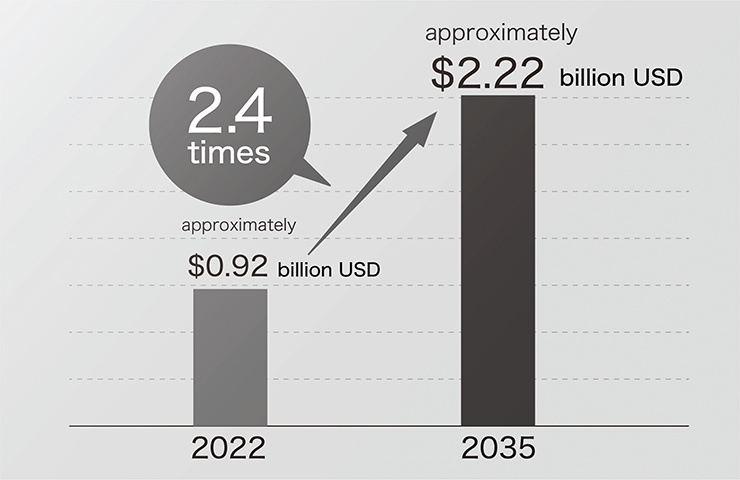
Recycled Plastic Market Size in Japan
Meanwhile, many conventional environmentally conscious materials face issues that can become barriers to adoption, such as high cost burdens, weak supply stability, and concerns about material quality. Our materials address these challenges by making full use of their characteristics as limestone based materials. Using limestone that is abundant worldwide, combined with a robust global supply chain, we deliver both stable supply and stable pricing. With a proven track record of adoption by many companies and local governments, our materials are highly regarded for both quality and reliability.
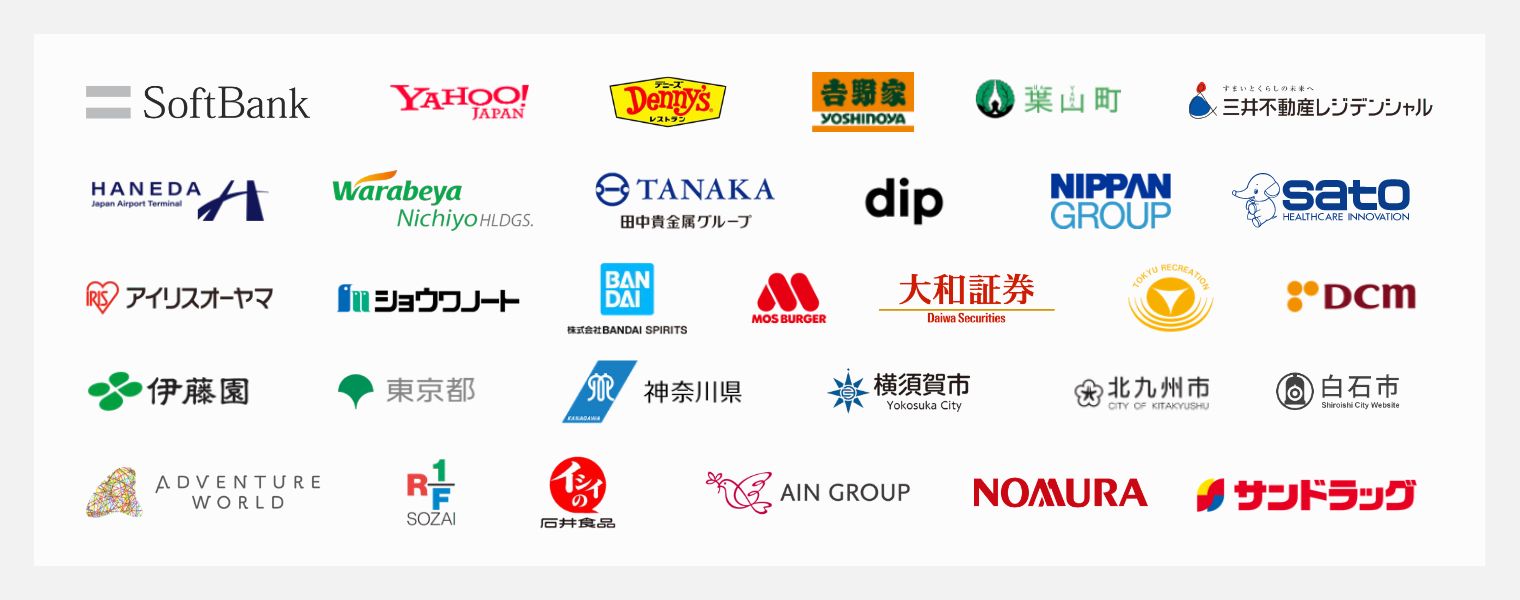
Number of Companies and Local Governments that use our materials
Our materials have already been introduced at international conferences such as COP, G20, and Davos meeting. They have been adopted by over 10,000 companies and local governments worldwide. Furthermore, our LCA (Life Cycle Assessment) analysis of environmental impact reduction effects has been third-party certified by the SuMPO/Internal-PCR Approval System, ensuring a high level of reliability in the results.
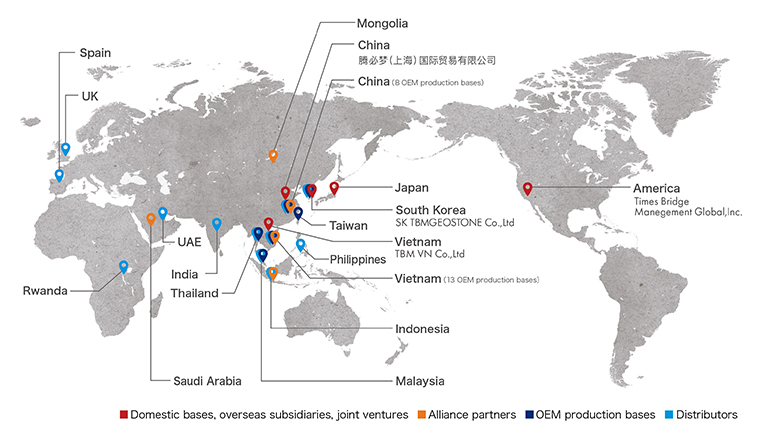
Global Expansion
We are building a strong supply chain and distributor network across the globe. With this, we are able to quickly supply products to any region in the world.
IP Strategy
Since obtaining our domestic patent in 2014, we have secured over 260 LIMEX-related patents in more than 50 countries worldwide and have received recognition such as the Ministry of Economy, Trade and Industry's "Intellectual Property Achievement Award." This intellectual property portfolio creates technological barriers to entry and a competitive advantage, enabling long-term stable supply and continuous improvement, making it a material that can be adopted with confidence.

- We have obtained patents in
- 51 countries

- We have obtained*
- Approximately 260 items
*Number of registered patents as of May 2026
*Cumulative number of cases, including domestic and international.
CCU materials
Development and sales of CCU calcium carbonate as a high-value-added raw material.
We are also developing CCU calcium carbonate produced from CO₂ derived from exhaust gases through a similar process. By applying the particle size and morphology control technologies cultivated through LIMEX, which also uses calcium carbonate as a raw material, we are able to create a high-value-added material whose properties can be customized according to specific applications. This material has already been commercialized by building materials manufacturers and can be widely utilized as an alternative to conventional ground calcium carbonate across various applications.
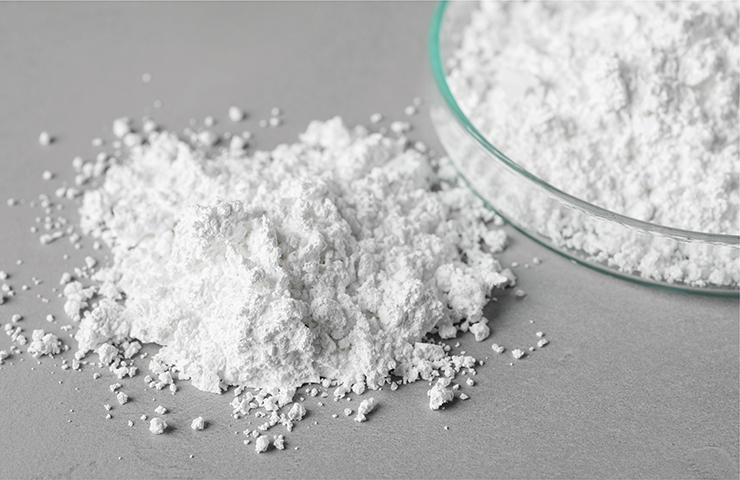
CO₂ captured from emission gas from industries such as coal power plants, cement plants and steel plants
We have established a full-stack system that consistently covers the entire process, from CO₂ capture and raw material development to production and commercialization.
A rational process that connects emission sources to urban infrastructure strongly accelerates carbon recycling in the construction sector.
CO₂ recovery
Captures exhaust gases that would otherwise have been released into the atmosphere from factories and power plants.
CO₂, once considered a liability to be reduced, is efficiently captured and transformed into a stable next-generation industrial raw material.
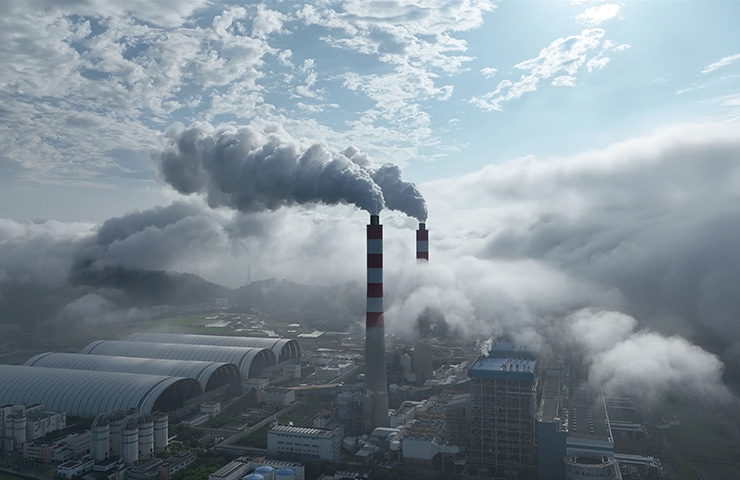
Raw material production
Through our proprietary low-environmental-impact process, captured CO₂ is chemically reacted with calcium-containing waste materials to synthesize CCU calcium carbonate, in which CO₂ is permanently fixed and mineralized.
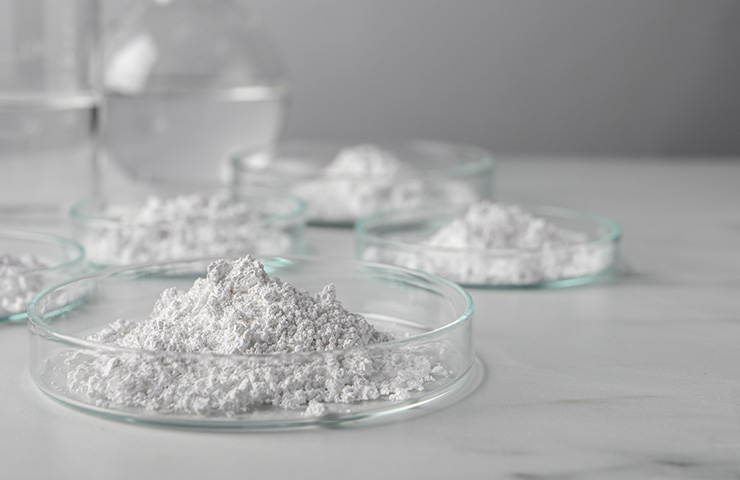
Product Development & Design
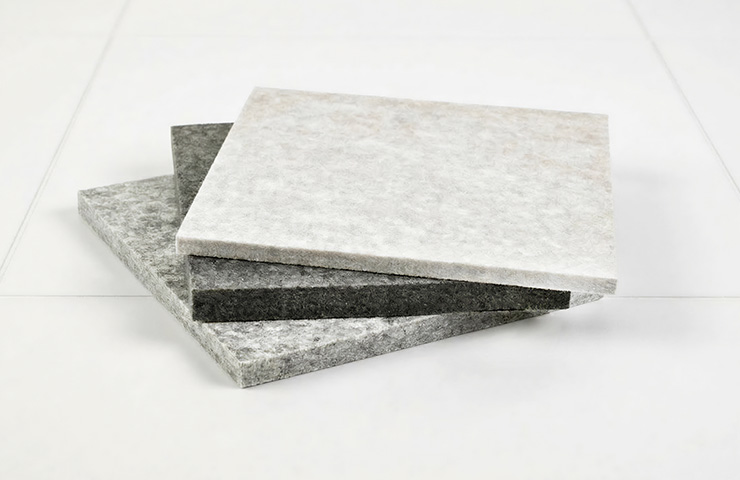
Using synthesized CCU calcium carbonate as a raw material, TBM applies its advanced material development and manufacturing technologies to convert it into building materials. Delivering both superior aesthetics and durability, these materials are provided to the construction industry as well as various other sectors.
Dissemination and Social Implementation
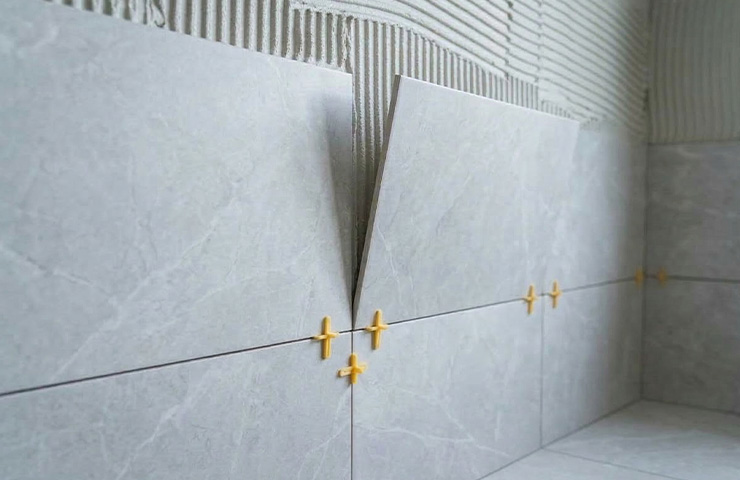
From offices and commercial facilities to residential spaces, these materials are integrated into the environments around us. By being implemented as interior and flooring materials, business and living spaces themselves become part of the carbon circulation ecosystem. While meeting environmental regulations both in Japan and internationally, these materials help create architectural spaces suited for a more sustainable future.
Low-carbon Material "LIMEX"
LIMEX is an environmentally conscious material and plastic alternative that contains more than 50 percent inorganic content such as calcium carbonate (limestone). Compared with petroleum-based plastics, it reduces both the use of petroleum-based plastics and CO₂ emissions over the product life cycle. By using abundantly available limestone as a main raw material, LIMEX lowers environmental impact while improving supply stability and price stability. LIMEX is produced at our factories in Japan and through a fabless OEM model with partners in Japan and overseas, can be processed on existing molding and printing equipment, and is now used by more than 10,000 companies and local governments in a wide range of applications such as packaging, bags and printed materials.

Feature
Reducing environmental impact
LIMEX uses limestone as a raw material, making it plastic alternative that reduces the use of petroleum-based plastics and CO₂ emissions throughout the product lifecycle. The amount of reduction can also be visualized through LCA (Life Cycle Assessment).
Price stability and competitiveness
Using limestone which is affordable and abundant as a resource, LIMEX ensures stable supply and price, making it highly price competitive compared to other environmentally conscious materials.
OEM manufacturing available, with a fabless model
LIMEX is compatible with a wide range of molding methods, including extrusion molding, blown-film molding, vacuum forming, and injection molding. It does not require dedicated equipment for production, and because existing molding machines can be used both at our own plants and at partner facilities, OEM production by contract manufacturers is also possible.
Applicati-on
Plastic alternative: LIMEX Pellet
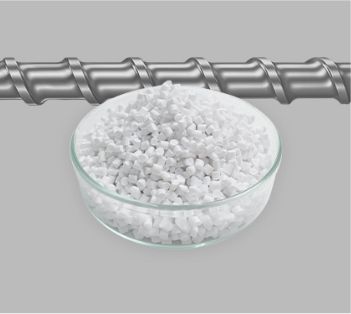
These are pellet-form LIMEX compounds that serve as an alternative to petroleum-based plastics. They are compatible with a wide range of molding methods, including blown-film molding, extrusion molding, injection molding, and vacuum forming, and are widely used for bags, packaging, and non-woven fabric.


Synthetic paper alternative: LIMEX Sheet
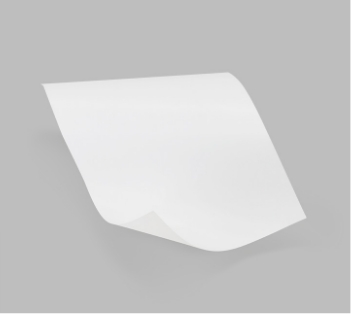
This sheet-form LIMEX is used as an alternative to synthetic paper. In addition to its environmental performance, it offers excellent water resistance and durability. By using existing printing and processing equipment, it is widely applied from printed materials to industrial materials, including backlit film signage, outdoor advertising, and plant tags.


About Limestone
Limestone is one of the few resources that even resource-scarce Japan can almost fully supply domestically, offering high stability in both supply and price. Because it is abundantly available worldwide, it also enables compact supply chains based on local production and local consumption. In addition, compared with polypropylene, a petroleum-based plastic, it can reduce greenhouse gas (GHG) emissions by about 83%*1 at the raw material procurement stage and by about 43%*2 at end-of-life incineration, helping to lower environmental impact across the entire product life cycle.*3
*1 Please note that limestone alone does not function as well as PP. Transportation: Assuming transportation of 500 km in a 10-ton truck
*2 Please note that limestone alone does not function in the same way as PP. Disposal method: Assumes incineration as general waste (taking into account incinerator operation and CO₂ generated from materials).
*3 Approximate calculation by TBM. May fluctuate depending on manufacturing conditions, etc. This is a reference value and not a guaranteed value. Main reference database: LCI database IDEA version 3.2.0 (2022/04/15) IDEA Lab, Safety Science Research Department, National Institute of Advanced Industrial Science and Technology | Impact assessment method: Climate change IPCC 2013 GWP 100a
Recycled Material (recycled containers and packaging materials)
At the Yokosuka circular factory, one of the largest facilities of its kind in Japan, we produce recycled containers and packaging materials made from household plastic containers and packaging waste. Leveraging our in-house R&D and material development capabilities, we have resolved issues traditionally associated with recycled containers and packaging materials, such as odor and deterioration of physical properties. This recycled also offers strength comparable to or greater than PIR (post-industrial recycled plastics) and virgin plastic, allowing customers to use recycled materials without compromising on quality. Furthermore, our material offers stronger price competitiveness than PIR and virgin plastic, as well as excellent environmental performance that helps reduce CO₂ emissions.

Yokosuka Circular Factory

- ・The world's first plant that automatically separates and recycles household-derived general-purpose plastics and LIMEX
- ・Completion in November 2022
- ・Annual processing record of approximately 12,000 tons
Feature
Stable supply guaranteed
With an annual processing capacity of approximately 40,000 tons and an annual production capacity of approximately 24,000 tons of recycled pellets, we will ensure a stable supply of recycled containers and packaging materials.
Providing and developing PCR, not PIR
Container recycled material materials are recycled plastics (PCR) made from plastic containers and packaging discarded from households. Compared to PIR (plastics derived from industrial waste), which has stable quality but is expensive and difficult to procure, container recycling materials have an advantage in terms of price, but they have issues such as odor and deterioration of physical properties. We solve the issues unique to PCR materials using the material development technology and R&D functions we have cultivated through LIMEX. We can also develop formulations tailored to customer product uses.
Strength and cost advantages comparable to or better than PIR and virgin materials
Using our material development technology and proprietary formulation, we have developed recycled containers and packaging materials that are as durable as or more durable than PIR or virgin plastic. It is highly price-competitive with virgin plastic. At the same time, it reduces CO₂ emissions by up to 6.43 kg (equivalent to up to 61%) per kg of container recycling material compared to virgin plastic.
*This is not a guaranteed value. Values may change depending on data acquisition conditions, etc. Cannot be compared with other companies' products due to differences in calculation and data collection methods.
Applicati-on
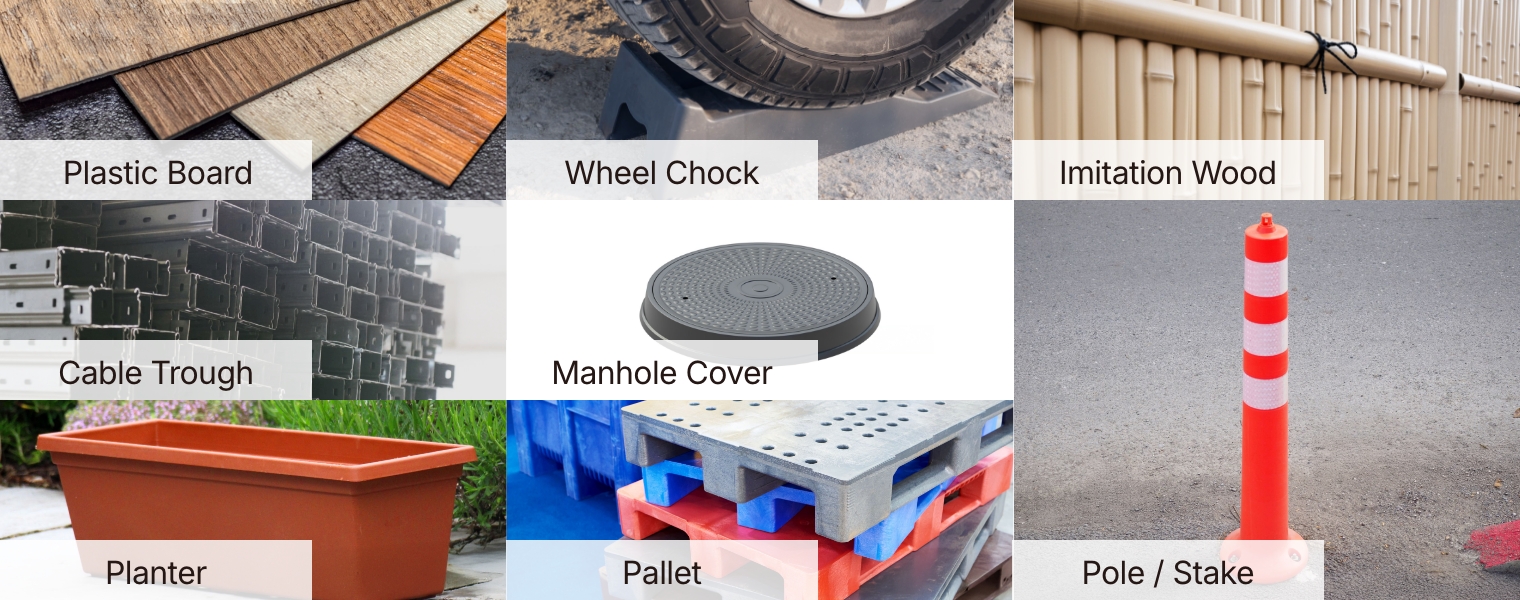
General container recycling products
High-performance regenerative agent: CirculeX
CirculeX is a high-performance recycled material developed using a unique blending and mixing technology, made from used container and packaging plastics (PCR material) discharged from households. It fundamentally solves the problems of conventional PCR material, such as reduced physical properties and odor, achieving strength (flexural strength and impact strength) that surpasses virgin plastics and approximately 40% reduction in odor compared to conventional materials. Because it can reduce CO₂ emissions by up to approximately 61% compared to virgin plastics, it makes a significant contribution to the growing global need for plastic material circulation and Decarbonization. Furthermore, it is available in grades of "high strength + low odor" and "high strength" and "low odor" depending on the application, making it a material that can be used in a wide range of product applications as a substitute for virgin material and PIR material (derived from industrial waste), from indoor applications such as furniture, home appliances, and automotive interior materials, where the adoption of virgin plastic material has been avoided until now, to building and logistics materials that require high durability.


Contact
For any inquiries, please use the contact form below.