
Press release
- LIMEX
TBM and TAIYO KIKAI Ltd. develop a sustainable film sensor device using "LIMEX Sheet" as a base material
~ First case of LIMEX in the electronics field and collaboration begins to establish manufacturing technology and mass production ~
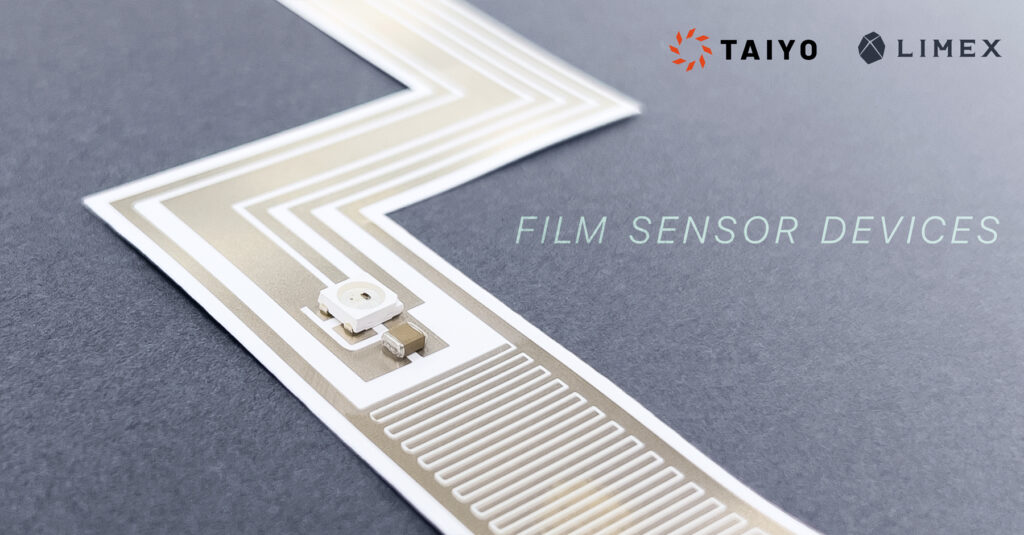
TBM is pleased to announce that it has developed an environmentally conscious film sensor device by printing a conductive circuit on "LIMEX Sheet," which is made mainly from inorganic materials such as calcium carbonate, using TAIYO KIKAI Ltd. proprietary conductive pattern high-speed transfer technology HSP (High-speed Printing) method. This is the first case of development using LIMEX in the electronics field. In the future, TBM will begin collaboration with TAIYO KIKAI, which has a track record of selling products in over 50 countries around the world, to establish manufacturing technology and mass production of environmentally friendly film sensor devices that combine the environmental performance of "LIMEX Sheet" with TAIYO KIKAI Ltd. HSP technology.
■ Background
In recent years, technological innovation in the use of the Internet of Things (IoT) has progressed in various fields, and the demand for sensor devices that collect core data is growing. Against this background, printed electronics technology, which can provide a variety of sensors and electronic circuits quickly and at low cost by applying conventional printing technology to the electronics field, has attracted attention. In addition, new concepts and technologies known as "sustainable electronics" have emerged in recent years, mainly in Europe, and there is a demand for improvements to conventional processes as well as a shift to materials with a lower environmental impact*.
* S. Harkema, TechBlick Master Class 2023 (Berlin)
■ Key points of this development
Normally, sheet-fed printing using cut sheet substrates is the mainstream method for printing film sensor devices, but the printing ink requires a long time to bake and a high baking temperature, which poses issues in terms of mass production and the high environmental impact of the process. In addition, when forming conventional conductive patterns on "LIMEX Sheet", there are cases where thermophysical issues arise during printing, which has been an obstacle to the development and mass production of electronic devices.
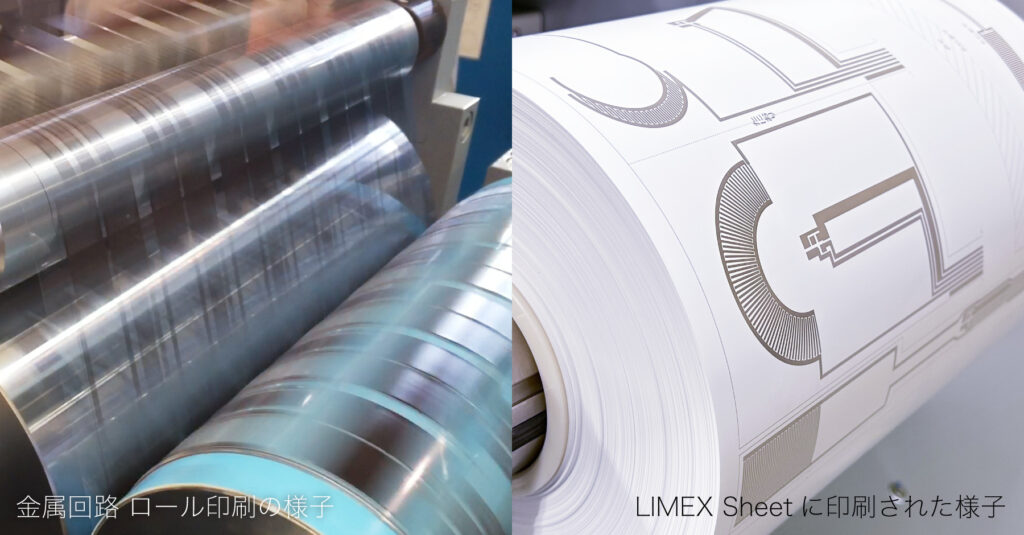
The HSP method (High-speed printing), a unique conductive pattern transfer technology developed by TAIYO KIKAI Ltd., is a unique printing technology that smoothly supplies fast-drying ink, enabling high-speed flexographic roll-to-roll printing. This has enabled a significant reduction in drying time, making it possible to manufacture mass-produced film sensor devices that also save energy in the manufacturing process, and is also a suitable method for forming conductive patterns on "LIMEX Sheet".
By using "LIMEX Sheet" as the base material for film sensor devices, it is expected that the amount of petroleum-based plastics used will be reduced by approximately 55% and greenhouse gas emissions, including CO2, will be reduced by approximately 52% compared to conventional PET film base materials. Compared to conventional paper base materials, it is also expected that the amount of water used will be reduced by approximately 94%*.
* This is an approximate value based on TBM's estimates and is not a guaranteed value. It is subject to change depending on the data acquisition situation, etc. The calculation covers only the base material part, from raw material procurement to incineration disposal (excluding the process of processing and transportation into tags).
Normally, sheet-fed printing using cut sheet substrates is the mainstream method for printing film sensor devices, but the printing ink requires a long time to bake and a high baking temperature, which poses issues in terms of mass production and the high environmental impact of the process. In addition, when forming conventional conductive patterns on "LIMEX Sheet", there are cases where thermophysical issues arise during printing, which has been an obstacle to the development and mass production of electronic devices.
The HSP method (High-speed printing), a unique conductive pattern transfer technology developed by TAIYO KIKAI Ltd., is a unique printing technology that smoothly supplies fast-drying ink, enabling high-speed flexographic roll-to-roll printing. This has enabled a significant reduction in drying time, making it possible to manufacture mass-produced film sensor devices that also save energy in the manufacturing process, and is also a suitable method for forming conductive patterns on "LIMEX Sheet".
By using "LIMEX Sheet" as the base material for film sensor devices, it is expected that the amount of petroleum-based plastics used will be reduced by approximately 55% and greenhouse gas emissions, including CO2, will be reduced by approximately 52% compared to conventional PET film base materials. Compared to conventional paper base materials, it is also expected that the amount of water used will be reduced by approximately 94%*.
* This is an approximate value based on TBM's estimates and is not a guaranteed value. It is subject to change depending on the data acquisition situation, etc. The calculation covers only the base material part, from raw material procurement to incineration disposal (excluding the process of processing and transportation into tags).
■ Future developments
The printed electronics market is expected to reach approximately 2 trillion yen in 2035*. The film sensor device developed this time is a candidate for deployment as a sensor for a wide range of measurement applications, including temperature, humidity, acceleration, pressure, and light, and the global shipment value of these devices has increased approximately 2.3 times over the past 10 years*. Going forward, TBM will promote environmental response as a sustainable electronics device, which is expected to grow in this market, and will begin collaborating with Taiyo Kikai Seisakusho to establish manufacturing technology and mass production of environmentally friendly film sensor devices using "LIMEX Sheet" as a substrate. In addition, TBM will strengthen collaboration with manufacturers and related companies in the industry and work to popularize "LIMEX Sheet" in the electronics field.
* Calculated from "Digital Transformation / Future Outlook for Organic Electronics in a Sustainable Society 2022"
* JEITA Sensor Global Status Survey: Announcement of Sensor Global Shipment Results (2021 and 2022): https://www.jeita.or.jp/japanese/stat/sensor/pdf/230911.pdf
■ What is LIMEX Sheet?
This intermediate product is made by processing LIMEX, a composite material with inorganic filler dispersion that contains more than 50% (by weight) of inorganic substances such as calcium carbonate, into a sheet. It can contribute to the conservation of resources such as oil, water, and forest resources used in the production of plastics and paper. Its environmental performance is calculated using a method called Life Cycle Assessment (LCA), which scientifically analyzes the environmental impact of a product's life cycle, from the procurement of raw materials to production, distribution, use, and disposal.