Environmental performance and durability were evaluated.
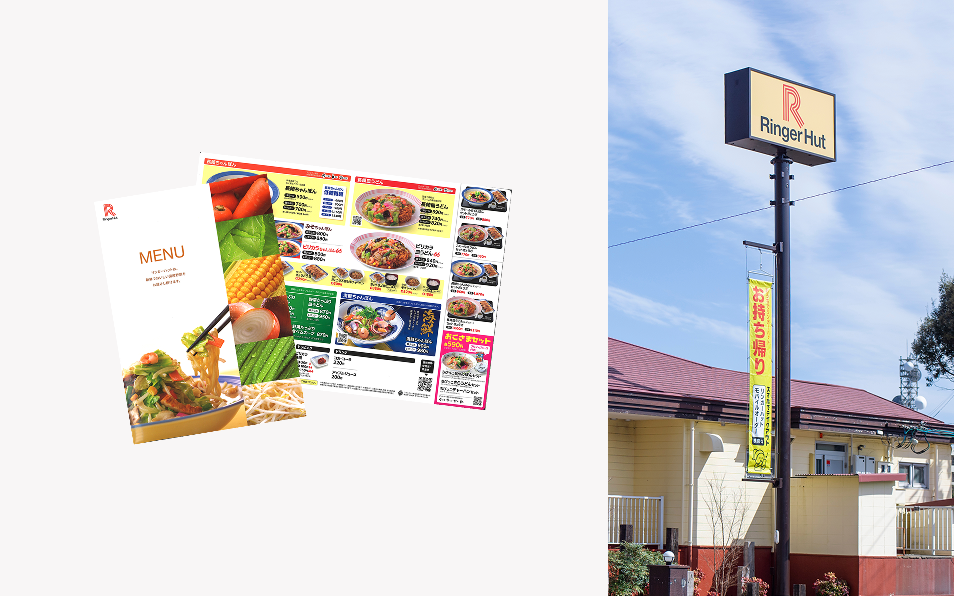
We've introduced LIMEX for our menu boards, which are the face of our store.

- Company Name:Ringer Hut Co., Ltd.
- Industry:Food and Beverage
- Menus and POP displaysfor various uses
- URLRinger Hut's CSR
table of contents
- 【assignment】
- They were considering specific measures to reduce the use of plastic and paper.
- Traditional laminated menus have durability issues, such as corners peeling off.
- [Products that were selected]
- Table menu
- 【effect】
- Compared to conventional products, it is expected that the amount of water used in the manufacturing process will be reduced by approximately 70 tons*1.
- LIMEX's superior durability prevents premature deterioration such as corner peeling, which was a problem with conventional laminated menus.*2
*1 These are calculated values for reference only and are not guaranteed values.
*2 Durability testing is still ongoing.
Ringer Hut Co., Ltd. is a company that operates restaurants, including the "Nagasaki Champon Ringer Hut" chain. Aiming to reduce its environmental impact and realize a sustainable society, the company is promoting various measures, such as achieving 100% renewable energy in its three domestic factories, improving the food recycling rate, and reducing the amount of single-use plastics used by actively utilizing environmentally friendly containers and packaging.
This time, we spoke with Mr. Abe, who is in charge of sales planning at Ringer Hut, about the background and effects of introducing LIMEX menu boards.
Mr. Abe's Profile
Sales Strategy Department, Sales Planning Team, Team Leader
Joined Ringer Hut Co., Ltd. in 1993. Held various sales manager positions in the Kyushu, Kansai, Chubu, and Kanto regions, and since 2021 has been in charge of the US business within the overseas promotion team. Joined his current department in December 2024, taking over the LIMEX implementation project and being involved in recruitment.
We want to reduce our use of plastic and paper.
- Could you tell us about the background behind the introduction of LIMEX?
-
Mr. Abe
For our company, which operates in the food industry, a field closely related to nature, the SDGs are an important theme, and we have been undertaking various initiatives at the operational level, such as reducing the use of plastics and paper. In the midst of these efforts, one of our members learned about LIMEX as an environmentally friendly material, and we began to consider introducing it.
The balance between quality and price was the deciding factor.
- I understand you were previously considering stone paper, another material. What was the deciding factor in choosing LIMEX this time?
-
Mr. Abe
Actually, we considered using stone paper a few years ago, but at the time we decided against it due to cost and issues with ink transfer during printing. On the other hand, we decided to use LIMEX because we determined it was the most suitable option in terms of maintaining price and quality while being environmentally conscious.
*Difference between LIMEX and stone paper: LIMEX is a composite material developed (patented) in Japan by TBM Co., Ltd., Ltd. as an alternative to plastic and paper. Stone paper, a synthetic paper made from limestone developed by a Taiwanese manufacturer, has a different basic patent than LIMEX.
Benefits that are easy to communicate to management and employees
- How did you communicate the benefits of LIMEX during the internal review process?
-
Mr. Abe
In addition to reducing plastic use, the fact that it contributes to saving water and forest resources was an easily understandable benefit that was easy to communicate within the company. The keywords "no paper" and "reduce plastic use" made it easy for management and employees who are conscious of the SDGs to understand the benefits of the implementation and made a positive impression.
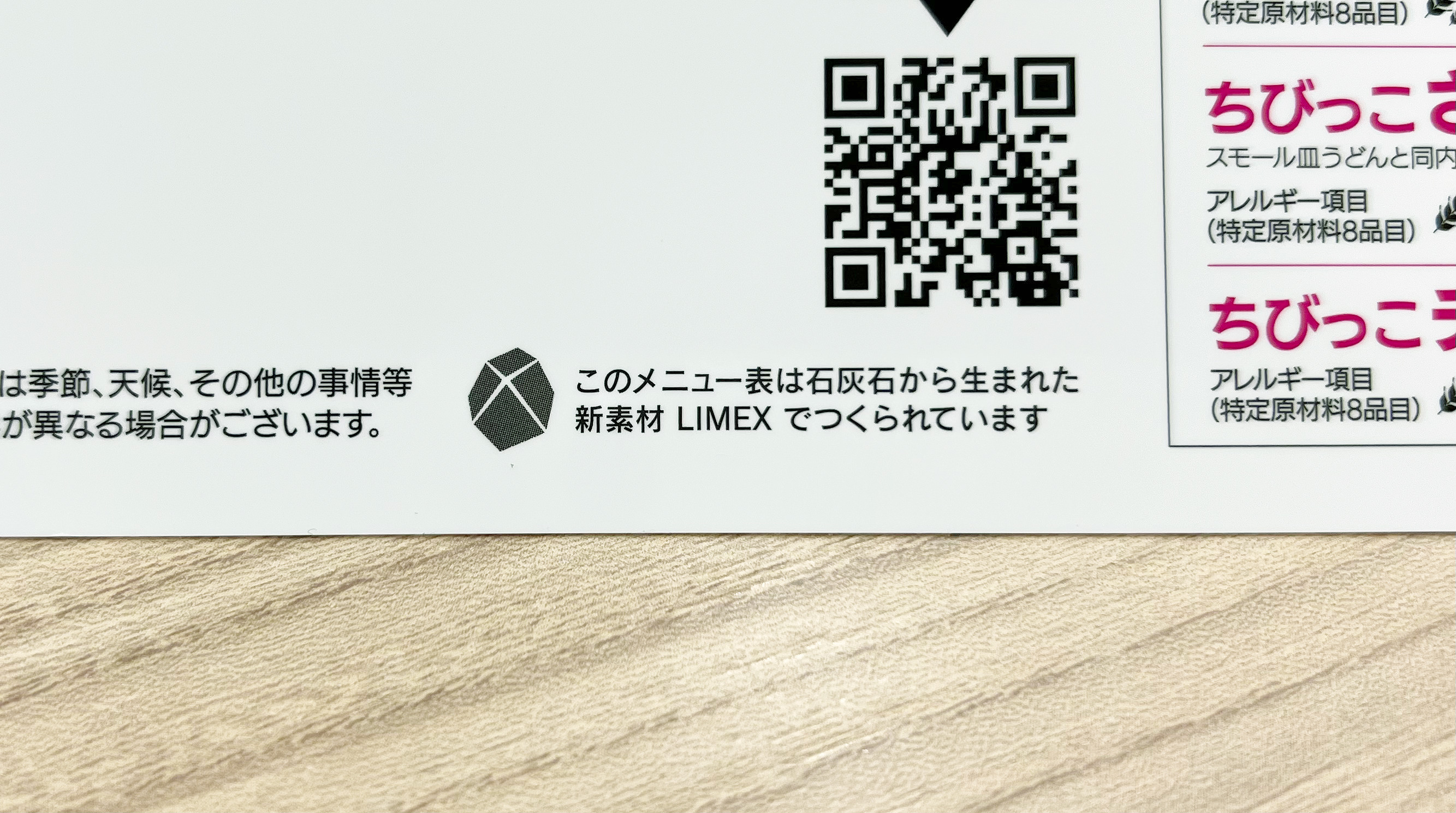
Furthermore, we appreciate that the LIMEX symbol can be included as a promotional display on the menus used in stores, which helps to communicate our initiative to the outside world.
The menu is the face of the restaurant.
- What differences do you notice compared to traditional laminated menus?
-
Mr. Abe
The menu is the most visible communication tool for customers and represents the face of the restaurant. Because it's frequently handled, durability is extremely important. Traditional menus, when laminated, often suffer from problems like corners peeling at the adhesive edges. Although we've only recently adopted it, we believe LIMEX, with its appropriate thickness and durability, will solve this problem.
We want to improve our corporate image.
- How do you plan to expand your initiatives going forward, having implemented LIMEX?
-
Mr. Abe
As a company that uses environmentally friendly materials, it's easier to communicate this to the outside world, and we hope it will lead to increased recognition both inside and outside the company. Furthermore, by introducing LIMEX, we want to convey our commitment to "choosing truly environmentally friendly products" not only to external parties but also to our employees.
In the long term, we are considering replacing other tools that use plastic or paper, such as coupons distributed in stores, business cards, and garbage bag, with LIMEX. For many years, our company has been committed to domestically produced vegetables and values safety and security. By adding LIMEX to this, we hope to promote a more comprehensive approach to sustainability.
Ringer Hut is promoting its SDGs initiatives, and by switching its menu boards, a communication tool with customers, to LIMEX, it has materialized its brand vision and strengthened awareness both internally and externally. TBM will continue to support Ringer Hut's efforts to promote social sustainability in the food and beverage industry.