
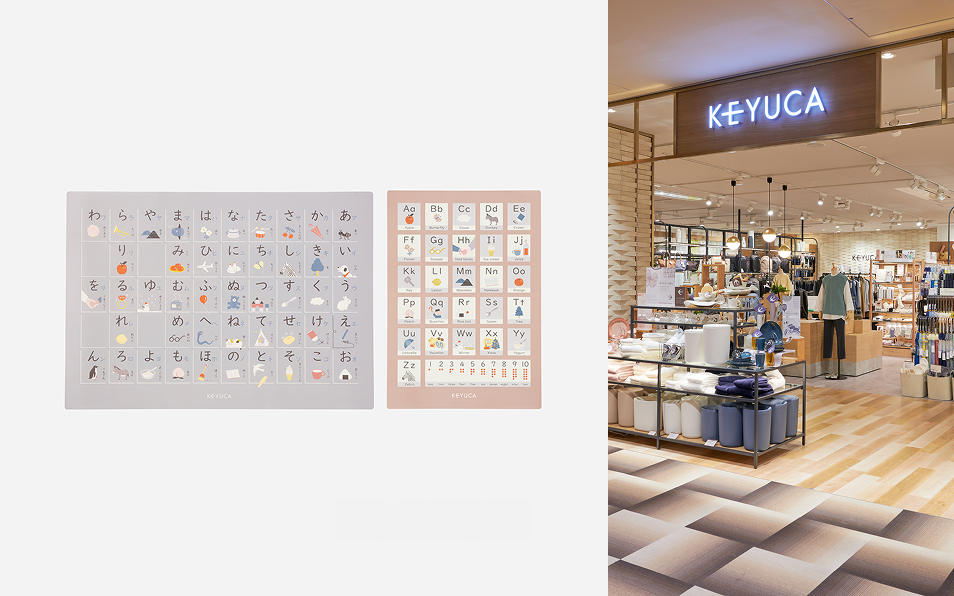
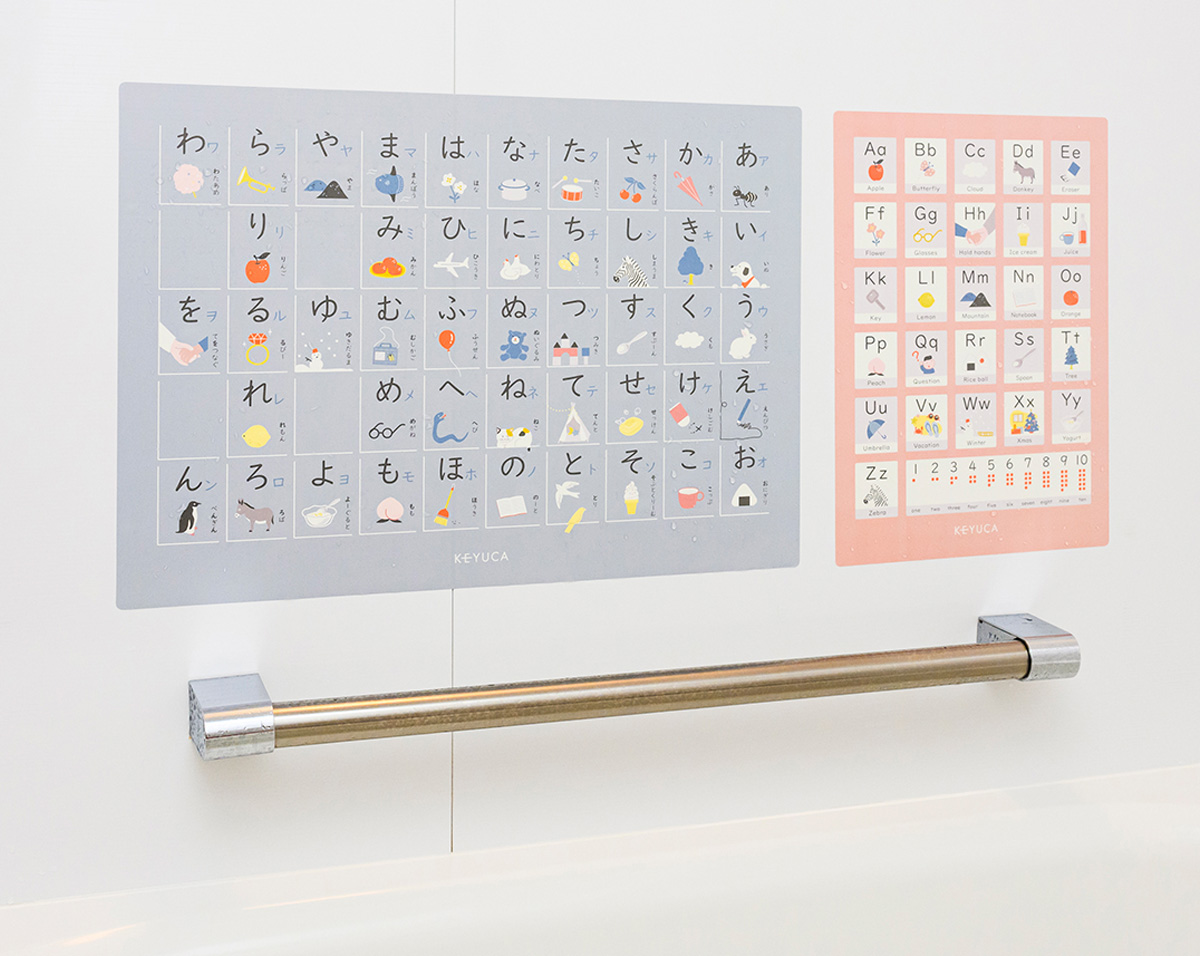
A bath poster that can be reapplied multiple times.
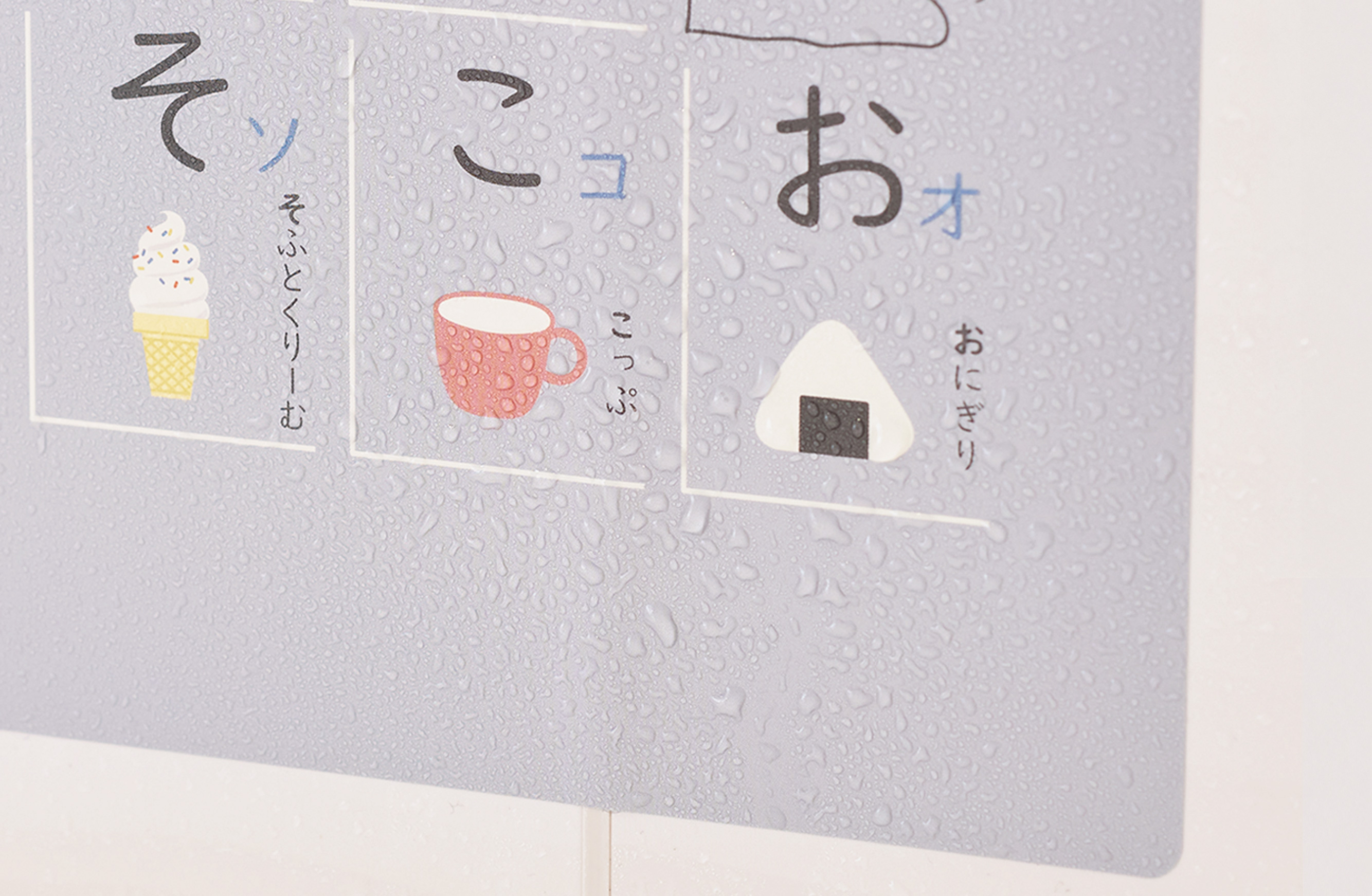
LIMEX's durability and water resistance make it ideal for use in wet areas.

- Company name:KEYUCA (Kawajun Co., Ltd.)
- Industry:Retail
- Applications forprinted matter
- URLKawajun's Sustainability
table of contents
- Challenges, adopted products, and effects
- We don't create products that are "good for the environment but don't sell."
- At first glance, it looks like ordinary paper. The texture is unlike anything you'd expect from something derived from limestone.
- The storytelling aspect of LIMEX can be a conversation starter.
- Its moderate thinness makes it easy to stick and difficult to peel off.
- Overcoming the hurdles of durability and price.
- Media coverage focusing on "materials"
- Product development that is kind to both the environment and people.
- 【assignment】
- Development of environmentally friendly products that balance environmental performance and product performance.
- [Products that were selected]
- Bath poster
- 【effect】
- By using no wood pulp as a raw material for the product, the amount of water required during manufacturing is significantly reduced, contributing to the conservation of natural resources.
- Media coverage that leverages the topicality of the "material"
Kawajun Co., Ltd. is a company that plans, manufactures, and sells interior goods, architectural hardware, commercial fixtures, and hotel supplies. Among its products, the lifestyle shop "KEYUCA" was launched in 2000 as its own brand, and under the concept of "Living Simply & Naturally," it offers a wide range of items, from furniture, curtains, kitchenware, fashion accessories, and food products.
This time, we spoke with KEYUCA about the background behind their decision to incorporate LIMEX into their "Bath Poster," an educational toy for children that they develop and sell, and the effects it has had.
We don't create products that are "good for the environment but don't sell."
- Could you tell us about your company's overall sustainability initiatives?
-
KEYUCA
Our company as a whole promotes sustainability from three perspectives: environment, society, and people. We have formed a cross-functional sustainability promotion project across the entire Kawajun Group.
At KEYUCA, we primarily deliver products directly to consumers, so it's difficult to get customers to accept products that are "good for the environment but expensive." Environmental considerations are essential, but ultimately, if a product doesn't have value and appeal, it becomes a "good for the environment, but doesn't sell." Therefore, we prioritize high product quality and then consider the environment as much as possible.
At first glance, it looks like ordinary paper. The texture is unlike anything you'd expect from something derived from limestone.
- Could you tell me how you came to consider LIMEX?
-
KEYUCA
Within our company, we hold inter-departmental meetings, where members from other departments shared information about paper alternative material made from limestone. Furthermore, we were introduced to LIMEX by a company with whom we had previously done business, and our initial interaction with your sales representatives was the starting point. When we actually touched the LIMEX Sheet, it looked like ordinary paper at first glance, and we felt that it had a texture that made it hard to believe that limestone was used in it.
The storytelling aspect of LIMEX can be a conversation starter.
- Out of all the materials available, why did you choose LIMEX for the "bath poster" item?
-
KEYUCA
We were actually considering strengthening our range of baby and kids' items, and a "bath poster" was among the products we were considering developing. Since bath posters are used in wet areas, water resistance is essential. LIMEX is water-resistant and also environmentally friendly because it is derived from limestone. We felt that "because this is a product that concerns children's future, we wanted to use an environmentally friendly material," so we decided to try out LIMEX.
Furthermore, compared to other paper materials, the story behind its use of limestone as a raw material was also appealing. Since baths involve actual water use, we thought it would be easy to connect it directly with the image of water resource conservation. We also believe that being able to tell children, "Actually, this is made from stone," can be a great conversation starter.
Its moderate thinness makes it easy to stick and difficult to peel off.
- I understand you considered materials from other companies before making your decision. What was the deciding factor in choosing LIMEX?
-
KEYUCA
When considering implementation, we ordered several samples and tested them by actually applying and removing them in the bathroom. We were concerned that other companies' materials would curl up or peel off when drying. LIMEX was initially proposed with a thickness of 150μm, but the risk of peeling during drying was a concern with that thickness. However, after being offered a thinner 80μm version, we reconsidered and ultimately decided to use LIMEX because it achieved "ease of application and resistance to peeling due to its appropriate thinness."
Overcoming the hurdles of durability and price.
- What points were discussed within the company when adopting LIMEX? Please tell us about any concerns or points of clarification within the company.
-
KEYUCA
First and foremost, we considered durability and ease of use. Bath posters are likely to be repositioned multiple times and are exposed to hot water and detergents. We checked whether the print would bleed, whether there were any durability issues, and whether they could be used safely and securely.
While price was a factor to consider, we decided to adopt it because it was comparable to synthetic papers from other companies.
Media coverage focusing on "materials"
- What has the customer reaction been like since sales actually began? Also, have you received any feedback from the media or outside the company?
-
KEYUCA
We were contacted by a sustainability-related program. When I spoke to the program staff about LIMEX, they ultimately chose our bath poster from among the many environmentally friendly products sold at KEYUCA. Many people seemed surprised that it was made from limestone, and we received positive feedback for that reason.
Product development that is kind to both the environment and people.
- I understand that you paid special attention to certain aspects of the design.
-
KEYUCA
Actually, I haven't mentioned this much to the public, but in the design, I was conscious of the concept of universal color. I took care to make it easy to read for people with visual impairments, for example, those who see colors differently than the general public. When I looked into it, I found data showing that 1 in 20 men and 1 in 500 women have color vision deficiency. That's why I aimed to create a product that is considerate of both the environment and people, and that's how I developed this product.
This time, TBM was able to adopt LIMEX not only for its environmental performance, water resistance, and durability, but also because of the "storytelling" aspect of LIMEX that enriches the learning experience unique to bath posters. Going forward, TBM will continue to support KEYUCA (Kawajun Co., Ltd.), which promotes sustainability through its business activities along three axes: environment, society, and people.